The ninth collection of harp music from Suzanne Guldimann is complete! Music for the Netherfield Ball: Songs and Dances of Jane Austen’s Era debuted this month as an ebook. The print edition will be available this summer. The book has already made the news in the Jane Austen Center’s online newsletter, which was both humbling and a thrill for the author, a longtime Austen enthusiast.
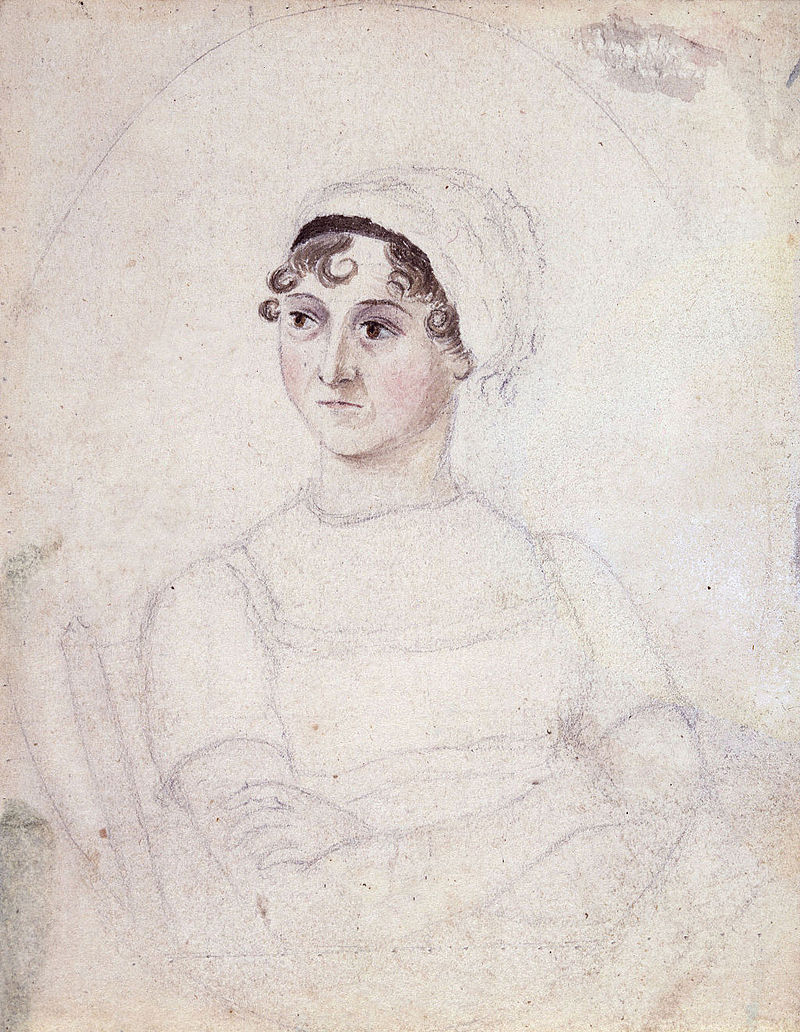
Guldimann read Jane Austen’s works for the first time not long after discovering the Celtic harp. She was 13. While she loved both, she never thought to put the two together until she encountered a booklet about the Austen family’s music collection.
In 2005, researchers Ian Gammie and Dr Derek McCulloch published a catalogue entitled Jane Austen’s Music. It was the first complete appraisal of the eight books of music once belonging to Austen and now housed at the Chawton House Library, in Hampton, UK, which had, in the words of the authors, “never before been fully catalogued and on closer inspection proved to have 300 musical items.”
I was fascinated to learn how eclectic and varied that music is, ranging from what we would consider classical, to the popular songs of the day. I was especially intrigued that the collection contained numerous Scottish and Irish folk songs that would be classed today as “Celtic.”
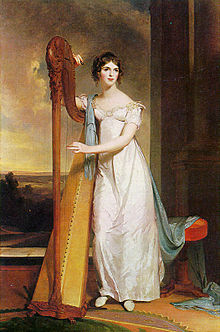
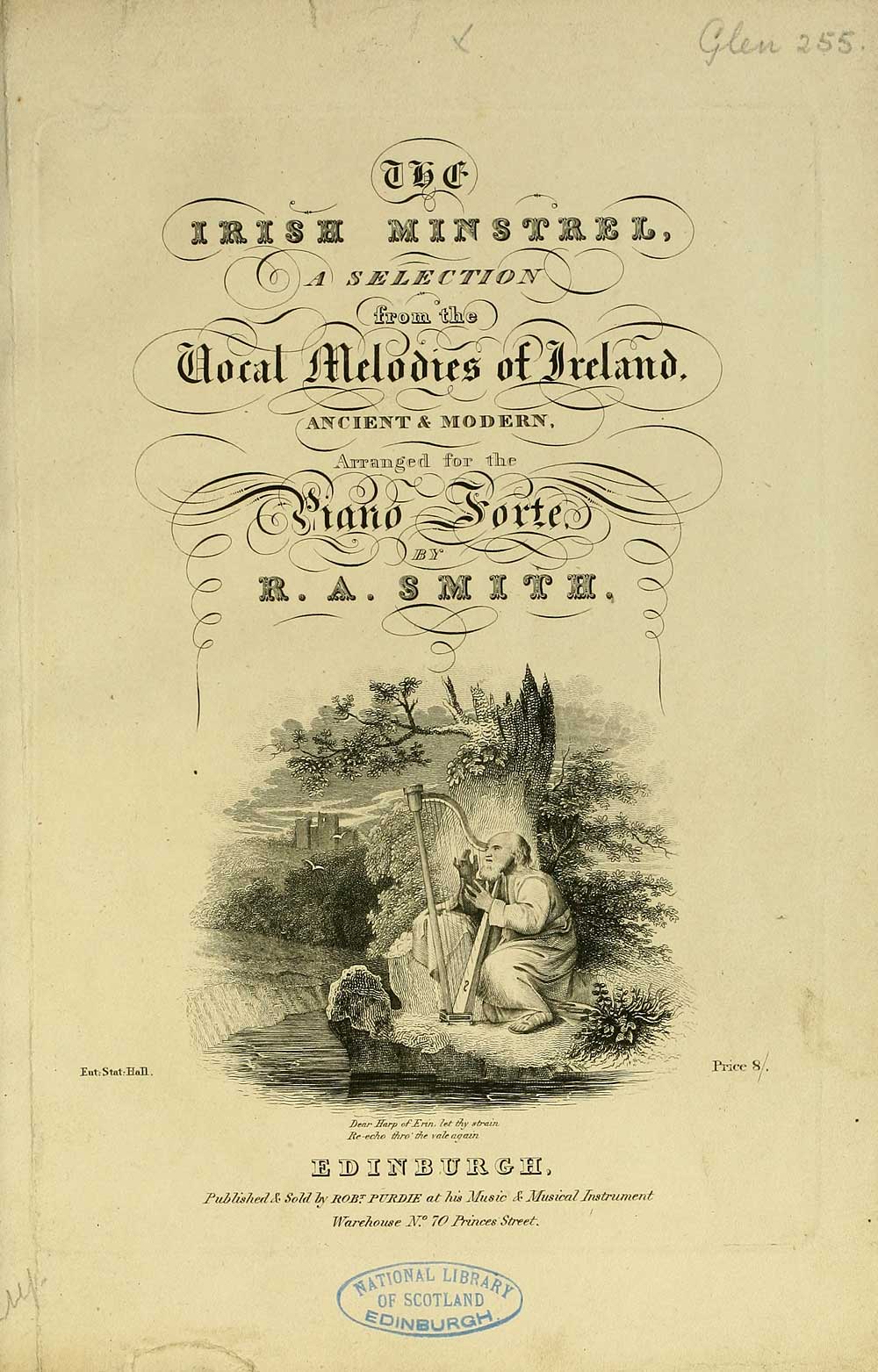
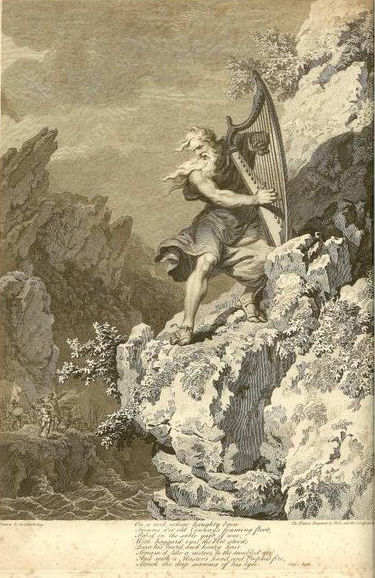
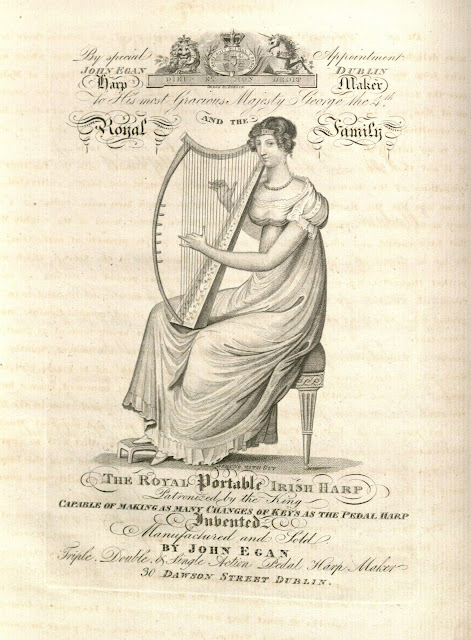
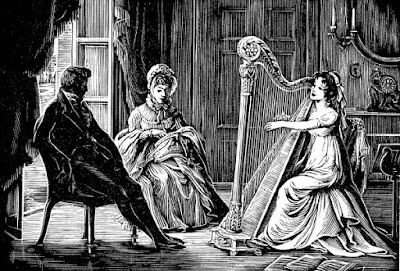
Currently, the Chawton Library houses 17 volumes of music once owned by the Austen family. They are a mix of printed sheet music and hand copied pieces, composed music and traditional airs. Three volumes have music that were copied out by Jane herself. Several others are inscribed with her name. Jane played the pianoforte, not the harp, but she was familiar with the instrument. The single-action pedal harp, invented around 1780, was a popular instrument in Austen’s lifetime. This was the instrument played by accomplished—and wealthy—young women like Mr Darcy’s sister Georgiana in Pride and Prejudice, the worldly and wealthy Mary Crawford in Mansfield Park, and by Austen’s own somewhat scandalous cousin, Eliza de Feuillide.
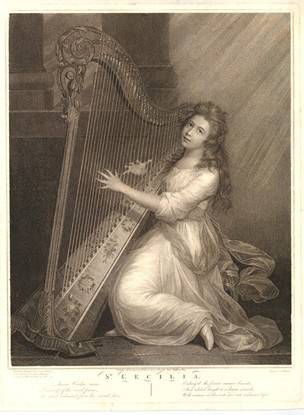
As Guldimann delved deeper into the musical world of Jane Austen she found an unexpected connection in the traditional airs to the ancient harping traditions of Scotland, Ireland and Wales. The Romantic movement that sent folklorists and song collectors in search of forgotten lore revived portions of those traditions. They embellished the songs with a baroque profusion of ornament and set new lyrics to them, but the airs themselves remain rooted in history.
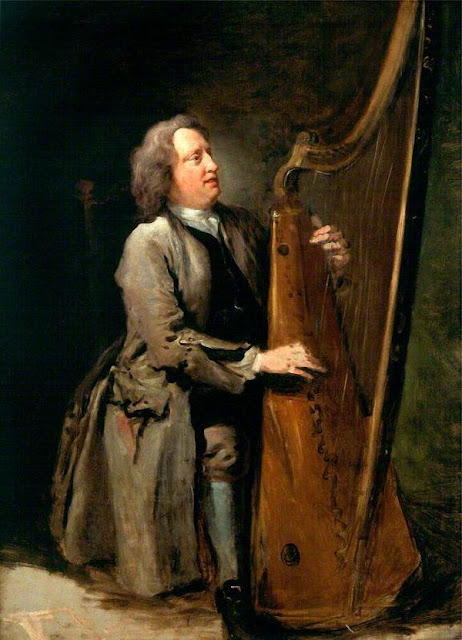
Some of the traditional Welsh harpers found new employment performing and teaching when the single-action harp was imported from France in the 18th century. A Welsh harper reportedly performed Handel’s celebrated harp concerto when in debuted in London, and George III, king during Austen’s lifetime, and his son the Prince Regent (for whom the Regency era is named), each had a royal Welsh harper at court.
Music for the Netherfield Ball contains a selection of the Scottish and Irish traditional airs so popular in the era, including several attributed to the old harpers, together with composed pieces by Mozart, Handel and Gluck, and a smattering of Welsh, French and Italian folksongs. All but one of the 19 tunes in Music for the Netherfield Ball have a direct connection with the Austen family, two pieces are said to have been among Jane Austen’s personal favorites.
The 19th piece in the collection slipped in by way of the 1995 television adaptation of Pride and Prejudice. “Mr Beveridge’s Maggot” predates Austen’s era by more than 100 years and is regarded by the experts in all-things-Austen as entirely anachronistic in its use as a dance, but it’s much-loved by many Janites, including the author.
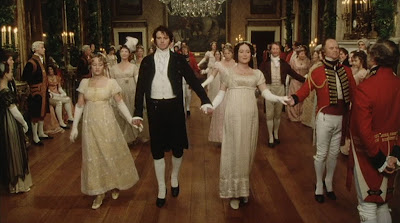
In assembling the music for this collection, Guld imagined it as a sampling of occasional music that might be played at a country gathering like the Netherfield Ball in Austen’s Pride and Prejudice: a mix of popular music, folk songs, and composed works, intended to entertain and give joy.
Guldimann began researching this project in 2009, with the goal of publishing the collection in time for the 200th anniversary of the publication of Pride and Prejudice in 2013. Instead, the publication was released just in time for the 200th anniversary of Austen’s death in 2017.
Almost all of the pieces in this collection can be played on a harp with a range of just two and a half octaves (a couple of pieces go up to the C above high C and require a few extra strings this time) the music can be played on any harp or melody instrument. Guldimann has arranged the music for the convenience of 21st century musicians, and has transposed and adapted where necessary. The arrangements include harp fingering, chord symbols, historical notes and lyrics.

Music for the Netherfield Ball is available in ebook and print form. The collection includes:
- Ask If Yon Damask Rose Be Sweet
- Che Farò Senza Euridice
- Corn Rigs
- The Duke of York’s New March
- Fairy Dance
- Highland Mary
- Joan Said to John
- Lochaber No More
- Love Never More Shall Give Me Pain
- Mr Beveridge’s Maggot
- My Lodging Is on the Cold Ground
- Nos Galen
- Prayer of the Sicilian Mariners
- Que j’aime à voir les hirondelles
- Robin Adair
- Roslin Castle
- Their Groves of Sweet Myrtle
- Waly, Waly
- Yellow-Haired Laddie
West of the Moon Books
3 June 2016


Leave a Reply